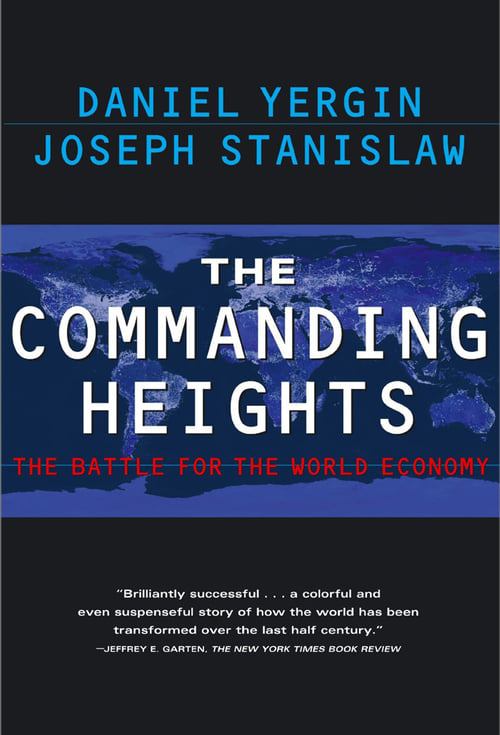
The people, ideas, and events that created our current world economy.
A global economy, energized by technological change and unprecedented flows of people and money, collapses in the wake of a terrorist attack .... The year is 1914. Worldwide war results, exhausting the resources of the great powers and convincing many that the economic system itself is to blame. From the ashes of the catastrophe, an intellectual and political struggle ignites between the powers of government and the forces of the marketplace, each determined to reinvent the world's economic order. For more than half a century the battle of ideas will rage. From the totalitarian socialist systems to the fascist states, from the independent nations of the developing world to the mixed economies of Europe and the regulated capitalism of the United States.
As the 1980s begin and the Cold War grinds on, the existing world order appears firmly in place. Yet beneath the surface powerful currents are carving away at the economic foundations. Western democracies still struggle with deficits and inflation, while communism hides the failure of its command economy behind a facade of military might. Worldwide, the strategies of government planning are failing to produce their intended results. As the command economies totter and collapse, privatization transfers economic power back into entrepreneurial hands, and whole societies go through wrenching change.
With communism discredited, more and more nations harness their fortunes to the global free-market. China, Southeast Asia, India, Eastern Europe, and Latin America all compete to attract the developed world's investment capital, and tariff barriers fall. In the United States Republican and Democratic administrations both embrace unfettered globalization over the objections of organized labor. But as new technology and ideas drive profound economic change, unforeseen events unfold.
2006
1964
2016
2018
2019
1986
1999
2014
1993
2004
2001
2024
2015
2023
1978
1987
2021
2026